Article
EMS vs. a Pure Software Vendor: Why It Matters for Hardware Products
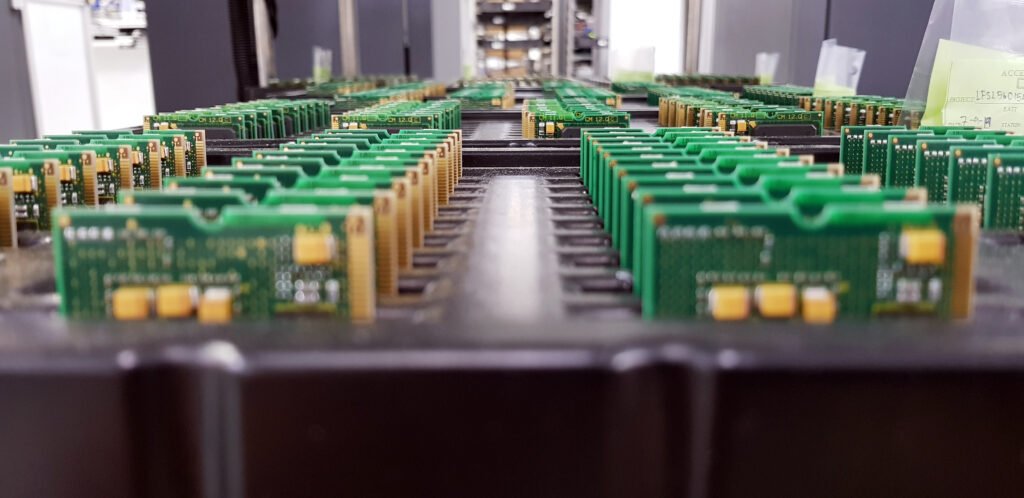
When a hardware product needs firmware written, there’s an obvious-looking shortcut: hire a software contractor for the code and a separate contract manufacturer for the boards, and coordinate the two yourself. It’s a reasonable instinct, and for very simple products it can work. For most connected hardware products, though, it creates a gap that costs real time later.
What EMS actually means
EMS — Electronics Manufacturing Services — describes a company that handles the physical side of building electronic products: PCB assembly, sourcing components, testing, and production at scale. An EMS provider that also does engineering work sits on both sides of the hardware/software boundary at once, rather than handing a design over a wall to manufacturing once software is “done.”
Where the pure-software-vendor gap shows up
A software contractor with no visibility into manufacturing constraints will write firmware that’s correct on the bench and then discover, late, that component substitutions, layout revisions, or test-fixture requirements from the factory floor require firmware changes nobody budgeted for. Power sequencing issues, test-point access, and production test coverage are all things that are far cheaper to solve when the firmware team and the manufacturing team are the same team, or at least sit inside the same organization talking to each other daily — not two vendors coordinating through email at arm’s length.
Why this matters more as volume grows
A single prototype tolerates some friction between the software and manufacturing sides. A production run of a few thousand units does not: a firmware bug that only shows up during in-circuit test, or a component substitution that the firmware wasn’t written to handle, can stall a production line at real cost. Engineering that’s built with manufacturing in mind from the start avoids discovering these problems for the first time on the factory floor.
Where D3 Engineering fits
D3 Engineering is the embedded software and firmware engineering team of D3 Innovation, an EMS company based in Penang, Malaysia — which is why we don’t take on software-only development work disconnected from that manufacturing context. Every engagement runs as part of an integrated EMS relationship, so the same organization that writes the firmware understands what happens to that firmware on the production line.
FAQ
What does EMS mean in electronics manufacturing?
EMS stands for Electronics Manufacturing Services — a company that handles the physical production side of electronic products, including PCB assembly, component sourcing, testing, and manufacturing at scale, sometimes alongside engineering and design services.
Why not just hire a software contractor for firmware and a separate factory for manufacturing?
It can work for very simple products, but it creates a coordination gap: a software team with no visibility into manufacturing constraints often writes firmware that runs into problems — component substitutions, test-point access, production test coverage — only after the design reaches the factory floor, which is a far more expensive time to discover them.
Does working with an EMS company mean giving up control of our software?
No — source code, documentation, and IP ownership transfer to the client as part of the engagement, the same as any other software development relationship. The difference is that the firmware is written by a team with direct visibility into how the product will actually be manufactured.
Does D3 Engineering only work within EMS engagements?
Yes. D3 Engineering only takes on software development as part of an integrated EMS engagement — we don’t offer standalone, software-only contracts disconnected from D3 Innovation’s manufacturing side.